That's my grandson at the end. Apparently the local firemen spray the kids with hoses as they drive by, to keep them cool. He brought a water sprayer to retaliate.
Friday, July 12, 2013
4th of July Parade
My son Earl sent the following video to me. It features the Manchester Regional Police and Fire Pipe Band marching at the 4th of July Parade in Columbia, CT. All pipers will recognize this tune as Oh! Rowantree Oh! Rowantree, which is typically coupled with Scotland the Brave.


Wednesday, July 3, 2013
Beyond Chance
Our nine-year-old granddaughter anticipated Canada Day with her grandparents, when she would enjoy her long-awaited treasure hunt. She loved the one we designed two years ago, and talked about this one with excitement. She knew it would be even more challenging. She slept-over the night before. At breakfast, she asked the blessing. Besides being thankful for the meal, she asked that this would be a sensational Canada Day. We loved her choice of words. As the story unfolds, that is exactly the kind of Day we had.

The day before, my wife and I set out the clue cards along the treasure hunt route we planned at Crescent Beach, a popular park for families to walk, picnic or swim in the ocean. Already, there were many enjoying the park, even before the holiday, Canada Day. It would be exciting, to see the crowd tomorrow, and the multitude of cars.
Good hiding places were carefully selected for each clue card. Each one would give the vicinity of the next clue card. We were careful not to spend much time at any location, to cause anyone to be suspicious about what we were doing.
After we hid the last card and the ultimate treasure itself, which was covered with a few small branches and grass in a hollow, we considered the preparations well carried out. Suddenly, we were struck by the thought that we should have put a roll of LifeSavers in with one of the clue cards. So, instead of continuing to our car, we went back over our trail. Surprisingly, we noticed that there was a group of young people gathered around the location of one of our well-hidden clues. The clue card was seen in the hands of one of the fellows and we asked to have it, saying that it was part of a planned treasure hunt for our grandchild. Grandma reached out and took the card from one of the young men.
That’s when we realized that to have this clue, the group must have found at least the one before it and possibly others before that. We carried on backwards and found that three clues had been discovered and that if we had not returned, the group of boys and girls would surely have found their way to our final treasure which was a nice-sized Lego kit for girls, called “Friends.” We reflected that our return to put the LifeSavers in with one of the clue cards was beyond chance. How else could one explain it?
We now had to return home and rewrite the two lost clue cards. We returned to Crescent Beach in the morning of Canada Day and retraced the treasure hunt trail to the three that had been taken. We carefully replaced each of the clues while assuring that nobody was watching. We continued to the treasure and found it to be safe. We went home again and would be ready after lunch, for the exciting hunt with our granddaughter. Her mother would bring her to our place to have lunch.
Canada Day was beautifully warm and sunny. It was a great day to have a treasure hunt with our granddaughter. She was excited, and had no difficulty finding the first clue hidden in the cleft of a rock. The second one was between two signs at the Dog Park and the third was fastened with thumbtacks under the railing of a new fence. The fourth was a bit trickier, being tacked under the fourth step of a set of stairs leading downward off the pathway. She had to return to the path and locate the pumping station, and along the way to enjoy the ducks, herons, bird sounds and wild flowers. The fifth clue was easy enough to find where a wooden rail fits into a post. What a delight to see her expression on locating it. This one led her to a big gate in the middle of the road. Here, the sixth clue was difficult to find, but she reasoned that it had to be inside the metal pipe, tucked in from the bottom and held there by a wad of newspaper.
Two carrots were the clue to help her find the next location, for it was evident they were for the two Shetland ponies near the end of that roadway. The ponies were encouraged to come. They munched on the carrots, anticipating more. Clue card number six had led to the horses and it instructed her to look up in the tree near the corral, where she would find the seventh clue card.
The card said to continue onto the street until she would find a white boat being used as a small flower garden. She was to search around it to locate her eighth card. That took intense searching, but eventually she found an envelope containing ten dollars and more instructions. She took us to the popular ice-cream dispensary where we were treated. On such a hot and beautiful day, a short rest was appreciated. Many others were enjoying Canada Day in this manner. With her eighth clue, which was obtained from one of the shopkeepers, our granddaughter urged us on our way along the beach.
Our granddaughter was looking for a house number on a white fence. Opposite to it would be a huge log where the next clue card would be hidden somewhere in its vicinity. That wasn’t too difficult, but it required a bit of crawling and inspection into every nook and cranny between rocks under the log. Besides a small-sized “Friend’s” kit, the ninth card’s envelope gave the clue to find the 10th one under a piece of driftwood. Incidentally, this was the first clue the group of young people had found and it was one of the three clues that we had to replace on Canada Day morning. The eleventh clue was located where it we had replaced it, secured with Scotch tape under a park bench. The twelfth clue led to the spot where we had discovered the young people who had found three clue cards and were preparing to continue on the treasure hunt that we had designed.
If we had not returned to put the LifeSavers with one of the clues, the group would have found the final clue, which would have led them to the treasure. If nobody found the thirteenth clue which was hidden under a rock marked with an X and located near a peer and a set of steps leading down to the ocean, then we could look forward to that clue leading us to the treasure. With little effort, our granddaughter found the rock with an X and continued up the steps, to the big rock near the hollow and the shrubbery that hid the package. Actually, we were amazed how confidently she ventured into the shrubbery and drew out the package wrapped in a black plastic bag. Quickly, she identified it as a popular construction kit called, “Friends” designed for girls. At home, she spent the rest of the afternoon assembling it, only taking time out for dinner. Later, we drove to Marine Beach to watch the fireworks. Afterwards, our granddaughter fell asleep in the car. It had been a very big day and before continuing to dreamy dreamland, she thanked her grandmother and grandfather for a wonderful day; one she will never forget. She loved hearing about the near-interruption in our nicely designed treasure hunt and reflected that God had heard her prayer, asking that He might make this a sensational Canada Day.

The day before, my wife and I set out the clue cards along the treasure hunt route we planned at Crescent Beach, a popular park for families to walk, picnic or swim in the ocean. Already, there were many enjoying the park, even before the holiday, Canada Day. It would be exciting, to see the crowd tomorrow, and the multitude of cars.
Good hiding places were carefully selected for each clue card. Each one would give the vicinity of the next clue card. We were careful not to spend much time at any location, to cause anyone to be suspicious about what we were doing.
After we hid the last card and the ultimate treasure itself, which was covered with a few small branches and grass in a hollow, we considered the preparations well carried out. Suddenly, we were struck by the thought that we should have put a roll of LifeSavers in with one of the clue cards. So, instead of continuing to our car, we went back over our trail. Surprisingly, we noticed that there was a group of young people gathered around the location of one of our well-hidden clues. The clue card was seen in the hands of one of the fellows and we asked to have it, saying that it was part of a planned treasure hunt for our grandchild. Grandma reached out and took the card from one of the young men.
That’s when we realized that to have this clue, the group must have found at least the one before it and possibly others before that. We carried on backwards and found that three clues had been discovered and that if we had not returned, the group of boys and girls would surely have found their way to our final treasure which was a nice-sized Lego kit for girls, called “Friends.” We reflected that our return to put the LifeSavers in with one of the clue cards was beyond chance. How else could one explain it?
We now had to return home and rewrite the two lost clue cards. We returned to Crescent Beach in the morning of Canada Day and retraced the treasure hunt trail to the three that had been taken. We carefully replaced each of the clues while assuring that nobody was watching. We continued to the treasure and found it to be safe. We went home again and would be ready after lunch, for the exciting hunt with our granddaughter. Her mother would bring her to our place to have lunch.
Canada Day was beautifully warm and sunny. It was a great day to have a treasure hunt with our granddaughter. She was excited, and had no difficulty finding the first clue hidden in the cleft of a rock. The second one was between two signs at the Dog Park and the third was fastened with thumbtacks under the railing of a new fence. The fourth was a bit trickier, being tacked under the fourth step of a set of stairs leading downward off the pathway. She had to return to the path and locate the pumping station, and along the way to enjoy the ducks, herons, bird sounds and wild flowers. The fifth clue was easy enough to find where a wooden rail fits into a post. What a delight to see her expression on locating it. This one led her to a big gate in the middle of the road. Here, the sixth clue was difficult to find, but she reasoned that it had to be inside the metal pipe, tucked in from the bottom and held there by a wad of newspaper.
Two carrots were the clue to help her find the next location, for it was evident they were for the two Shetland ponies near the end of that roadway. The ponies were encouraged to come. They munched on the carrots, anticipating more. Clue card number six had led to the horses and it instructed her to look up in the tree near the corral, where she would find the seventh clue card.
The card said to continue onto the street until she would find a white boat being used as a small flower garden. She was to search around it to locate her eighth card. That took intense searching, but eventually she found an envelope containing ten dollars and more instructions. She took us to the popular ice-cream dispensary where we were treated. On such a hot and beautiful day, a short rest was appreciated. Many others were enjoying Canada Day in this manner. With her eighth clue, which was obtained from one of the shopkeepers, our granddaughter urged us on our way along the beach.
Our granddaughter was looking for a house number on a white fence. Opposite to it would be a huge log where the next clue card would be hidden somewhere in its vicinity. That wasn’t too difficult, but it required a bit of crawling and inspection into every nook and cranny between rocks under the log. Besides a small-sized “Friend’s” kit, the ninth card’s envelope gave the clue to find the 10th one under a piece of driftwood. Incidentally, this was the first clue the group of young people had found and it was one of the three clues that we had to replace on Canada Day morning. The eleventh clue was located where it we had replaced it, secured with Scotch tape under a park bench. The twelfth clue led to the spot where we had discovered the young people who had found three clue cards and were preparing to continue on the treasure hunt that we had designed.
If we had not returned to put the LifeSavers with one of the clues, the group would have found the final clue, which would have led them to the treasure. If nobody found the thirteenth clue which was hidden under a rock marked with an X and located near a peer and a set of steps leading down to the ocean, then we could look forward to that clue leading us to the treasure. With little effort, our granddaughter found the rock with an X and continued up the steps, to the big rock near the hollow and the shrubbery that hid the package. Actually, we were amazed how confidently she ventured into the shrubbery and drew out the package wrapped in a black plastic bag. Quickly, she identified it as a popular construction kit called, “Friends” designed for girls. At home, she spent the rest of the afternoon assembling it, only taking time out for dinner. Later, we drove to Marine Beach to watch the fireworks. Afterwards, our granddaughter fell asleep in the car. It had been a very big day and before continuing to dreamy dreamland, she thanked her grandmother and grandfather for a wonderful day; one she will never forget. She loved hearing about the near-interruption in our nicely designed treasure hunt and reflected that God had heard her prayer, asking that He might make this a sensational Canada Day.
Wednesday, June 19, 2013
A Complete Makeover
Together, the stories about what Jesus did and what He taught, are the church’s central messages. They are called The Gospel and without it, churches would have no meaning. No other message can change hearts and lives like the retelling of Jesus and His love.
 The Bible doesn’t teach that you will be rewarded with eternal life in Heaven by being good. Rather, it teaches about God and how we may relate to Him. A religious person called Nicodemus visited Jesus one night. He had his own perception of Jesus even before he came. He believed Jesus performed miracles because God helped Him to perform them. Nevertheless, he wanted to know who Jesus was. Jesus said he would never understand Him until he knew Him personally. He could not relate to Him unless he had a spiritual birth, a complete change in his life, in which He would make God central. He called it being “born again.” In other words, for him to know Jesus personally, a change in his life was essential; a complete makeover.
Jesus told Nicodemus that although he was a teacher, he still did not understand the need to put his complete trust in God. He was an educated person, a member of the Sanhedrin, the supreme council and highest religious and legal authority of the ancient Jewish nation. Like others, he could sit in church each Sunday and not understand the need to believe in God’s reality and put his trust in Him.
We know that many don’t have faith in Jesus even though they’ve heard the Gospel taught every Sunday morning. They have their own answer to being godly; that all who go to church are basically good and do what is good. However, the Gospel does not expound upon being good or religious. The principles are there for one to make a personal decision to follow Jesus or not. We saw that Nicodemus had a spiritual change in His life after having met Jesus. He indicated it by bringing a mixture of myrrh and aloes for Jesus’ burial.
Mystery surrounds the Gospel because the work of God’s Spirit is invisible and mysterious. Jesus called for a radical change in Nicodemous’ life; similarly in ours. A conversion experience is a mystery in itself. He compared the work of the Spirit with the wind, which we cannot see although we can experience its effects. We can’t explain how the Spirit works in a new believer’s heart, but He, the Spirit, affects people with His will, and acts in accordance with the Sovereign will of God. We are unable to develop a relationship with God without already having had the Holy Spirit change us. He calls us, then convicts and converts us. There is nothing in us that will predispose us to come to God. No one, nor anything but the Holy Spirit will draw us to Him. Spiritual re-birth is totally by God’s grace. The Spirit brings us into union with God. One will realize it when the Spirit of God touches deep into his or her heart.
Applying the Gospel to our lives will help to give us a new life and relationship with God. Scripture tells us, “God sent not His Son into the world to condemn the world; but that the world through Him might be saved. He that believeth on Him is not condemned: but he that believeth not is condemned already, because he hath not believed in the name of the only begotten Son of God.” (John 17, 18) To Emphasize that message, that believing or not believing in God, is a choice to be made, the Scripture states, “Whoever does not believe is condemned already.” God gave His beloved Son “that whosoever believeth in Him should not perish, but have eternal life.” (John 3:15)
It is not logical that God would sacrifice His Son to die for anyone, especially for His enemies. One can’t explain it correctly until he or she truly believes, because the Gospel is foolishness to those who don’t believe. Scripture tells us, “the preaching of the cross is to them that perish foolishness; but unto us which are saved, it is the power of God.” (1 Corinthians 1:18)
 Many Christians have difficulty explaining in more than one sentence, what being a Christian means to them. They could refer to the statement that tells how much God loves us, as stated in John 3:16. It is the very crux of the Gospel stating the supreme sacrificial act of God giving His Son. John’s Gospel explains that Jesus is the living God. He was “God in the flesh.” God sent Jesus on a mission, which was to die. Why did He have to die? He died for you and me, because God could not forgive us of our sins and forget about them without a Supreme Sacrifice. There isn’t a sufficient sacrifice other than that of God’s Son.
If God did not love us sufficiently, He would not have bothered to provide His Son to redeem us from the penalty of sin, which is to be completely annihilated from God. Man is in a sinful state and God is Holy. Because of this, God cannot look at sin. Because God is just, His justice has to be satisfied. If it were satisfied, man would be dead without another consideration. God, with His incredible love provided the solution, which is to rescue us from ourselves, if we request to be rescued.
A comparable situation would be if you were judged guilty for a misdemeanor, and the judge said, “You are guilty and your penalty is a thousand dollars. However, I acknowledge that you are unable to pay, so I will write the cheque to pay your fine myself.” That is comparable to what God did. On the cross, Christ took our punishment, to pay for our sins and redeem us so we’d be guiltless before God. We no longer need to have a broken relationship with God.
Whosoever believes will have eternal life. Even so, everyone will benefit from the Gospel; not just those who believe in Christ’s deity. That’s because there is so much that Jesus taught that could improve the quality of our lives.
We avoid the words perish, hell, punishment, Satan, etc., as if they were imaginary. They are not, but very real. Scripture tells us that Satan is like a roaring lion walking up and down the earth to entrap us. 1 Peter 5:8 reads, “Be sober, be vigilant; because your adversary the devil, as a roaring lion, walketh about, seeking whom he may devour.” He makes evil attractive to entice the unwary to accept their appeal. For the wise, who make the correct choice between evil and good, Scripture promises eternal life with God, a Spiritual life that begins by a relationship with Jesus. God’s love is paramount.
How is it that God can condemn people to eternal separation from Him? Actually, He doesn’t! God did not send His Son into the world to condemn the world, but to save the world. We are all condemned until we believe. There is no condemnation to those who believe in Jesus, “who walk not after the flesh, but after the Spirit.” (Romans 8:1) Because Jesus was perfect, He was the Perfect Sacrifice for our sins. Jesus is the only way to pay for our sins. It is “not by works of righteousness which we have done, but according to His mercy He saved us." (Titus 3:5) It is by the precious blood of Jesus who was sacrificed for our sakes, that we are saved. Jesus is a gift of love from God.
The piper who would like to have a hymn at his or her fingertips to support the Scriptural verse, John 3:16, could choose, “That Grand Old Word, Whosoever.” Scripture reserves the reward of eternal life to “whosoever believes,” which requires a complete makeover.

Jesus told Nicodemus that although he was a teacher, he still did not understand the need to put his complete trust in God. He was an educated person, a member of the Sanhedrin, the supreme council and highest religious and legal authority of the ancient Jewish nation. Like others, he could sit in church each Sunday and not understand the need to believe in God’s reality and put his trust in Him.
We know that many don’t have faith in Jesus even though they’ve heard the Gospel taught every Sunday morning. They have their own answer to being godly; that all who go to church are basically good and do what is good. However, the Gospel does not expound upon being good or religious. The principles are there for one to make a personal decision to follow Jesus or not. We saw that Nicodemus had a spiritual change in His life after having met Jesus. He indicated it by bringing a mixture of myrrh and aloes for Jesus’ burial.
Mystery surrounds the Gospel because the work of God’s Spirit is invisible and mysterious. Jesus called for a radical change in Nicodemous’ life; similarly in ours. A conversion experience is a mystery in itself. He compared the work of the Spirit with the wind, which we cannot see although we can experience its effects. We can’t explain how the Spirit works in a new believer’s heart, but He, the Spirit, affects people with His will, and acts in accordance with the Sovereign will of God. We are unable to develop a relationship with God without already having had the Holy Spirit change us. He calls us, then convicts and converts us. There is nothing in us that will predispose us to come to God. No one, nor anything but the Holy Spirit will draw us to Him. Spiritual re-birth is totally by God’s grace. The Spirit brings us into union with God. One will realize it when the Spirit of God touches deep into his or her heart.
Applying the Gospel to our lives will help to give us a new life and relationship with God. Scripture tells us, “God sent not His Son into the world to condemn the world; but that the world through Him might be saved. He that believeth on Him is not condemned: but he that believeth not is condemned already, because he hath not believed in the name of the only begotten Son of God.” (John 17, 18) To Emphasize that message, that believing or not believing in God, is a choice to be made, the Scripture states, “Whoever does not believe is condemned already.” God gave His beloved Son “that whosoever believeth in Him should not perish, but have eternal life.” (John 3:15)
It is not logical that God would sacrifice His Son to die for anyone, especially for His enemies. One can’t explain it correctly until he or she truly believes, because the Gospel is foolishness to those who don’t believe. Scripture tells us, “the preaching of the cross is to them that perish foolishness; but unto us which are saved, it is the power of God.” (1 Corinthians 1:18)
 Many Christians have difficulty explaining in more than one sentence, what being a Christian means to them. They could refer to the statement that tells how much God loves us, as stated in John 3:16. It is the very crux of the Gospel stating the supreme sacrificial act of God giving His Son. John’s Gospel explains that Jesus is the living God. He was “God in the flesh.” God sent Jesus on a mission, which was to die. Why did He have to die? He died for you and me, because God could not forgive us of our sins and forget about them without a Supreme Sacrifice. There isn’t a sufficient sacrifice other than that of God’s Son.
If God did not love us sufficiently, He would not have bothered to provide His Son to redeem us from the penalty of sin, which is to be completely annihilated from God. Man is in a sinful state and God is Holy. Because of this, God cannot look at sin. Because God is just, His justice has to be satisfied. If it were satisfied, man would be dead without another consideration. God, with His incredible love provided the solution, which is to rescue us from ourselves, if we request to be rescued.
A comparable situation would be if you were judged guilty for a misdemeanor, and the judge said, “You are guilty and your penalty is a thousand dollars. However, I acknowledge that you are unable to pay, so I will write the cheque to pay your fine myself.” That is comparable to what God did. On the cross, Christ took our punishment, to pay for our sins and redeem us so we’d be guiltless before God. We no longer need to have a broken relationship with God.
Whosoever believes will have eternal life. Even so, everyone will benefit from the Gospel; not just those who believe in Christ’s deity. That’s because there is so much that Jesus taught that could improve the quality of our lives.
We avoid the words perish, hell, punishment, Satan, etc., as if they were imaginary. They are not, but very real. Scripture tells us that Satan is like a roaring lion walking up and down the earth to entrap us. 1 Peter 5:8 reads, “Be sober, be vigilant; because your adversary the devil, as a roaring lion, walketh about, seeking whom he may devour.” He makes evil attractive to entice the unwary to accept their appeal. For the wise, who make the correct choice between evil and good, Scripture promises eternal life with God, a Spiritual life that begins by a relationship with Jesus. God’s love is paramount.
How is it that God can condemn people to eternal separation from Him? Actually, He doesn’t! God did not send His Son into the world to condemn the world, but to save the world. We are all condemned until we believe. There is no condemnation to those who believe in Jesus, “who walk not after the flesh, but after the Spirit.” (Romans 8:1) Because Jesus was perfect, He was the Perfect Sacrifice for our sins. Jesus is the only way to pay for our sins. It is “not by works of righteousness which we have done, but according to His mercy He saved us." (Titus 3:5) It is by the precious blood of Jesus who was sacrificed for our sakes, that we are saved. Jesus is a gift of love from God.
The piper who would like to have a hymn at his or her fingertips to support the Scriptural verse, John 3:16, could choose, “That Grand Old Word, Whosoever.” Scripture reserves the reward of eternal life to “whosoever believes,” which requires a complete makeover.
Thursday, June 13, 2013
New Jazz
My son Earl is an accomplished jazz pianist and music professor in Connecticut. How a bagpiper could father a jazz musician is perhaps one of the world's most puzzling unsolved mysteries. Trust me, I tried to get him going on the pipes as a young lad, but alas, I suppose it wasn't his calling in life. Instead, he often accompanied me on the electronic organ when I played the call to worship at church. Those were some memorable times!
Through Kickstarter, Earl is now pre-selling advanced copies of his new jazz recording, "Mirror of the Mind". All revenues from advanced sales will go towards paying for manufacturing and promoting costs associated with putting out a CD. Please take a minute to watch the video below. While you listen to the music, kindly consider supporting his project.
http://www.kickstarter.com/projects/earlmacdonald/earl-macdonald-mirror-of-the-mind-cd
Earl's last CD was nominated for a JUNO award (for my American friends, a JUNO is the Canadian equivalent of a Grammy) for traditional jazz album of the year. It wouldn't surprise me if this one gets a similar nomination. If it does, I'll have a reason to return to Winnipeg, where this year's awards ceremony will take place.
He tells me there is even a song dedicated to his mother and me, called "Miles Apart". Apparently he wrote it while thinking about how unfortunate it is that we now live on opposite coasts and can't get together more than once per year or so. It certainly would be nice to have his family closer to us.
 After having paid for Earl's piano and organ lessons for so many years, I will gladly accept my free copy of this disc with a smile. BUT... I encourage all of my friends to buy one (or three!).
Advanced copies can only be ordered until July 1st, so please purchase your CD or digital download today!
This link will take you to his Kickstarter page:
http://www.kickstarter.com/projects/earlmacdonald/earl-macdonald-mirror-of-the-mind-cd
Through Kickstarter, Earl is now pre-selling advanced copies of his new jazz recording, "Mirror of the Mind". All revenues from advanced sales will go towards paying for manufacturing and promoting costs associated with putting out a CD. Please take a minute to watch the video below. While you listen to the music, kindly consider supporting his project.
http://www.kickstarter.com/projects/earlmacdonald/earl-macdonald-mirror-of-the-mind-cd
Earl's last CD was nominated for a JUNO award (for my American friends, a JUNO is the Canadian equivalent of a Grammy) for traditional jazz album of the year. It wouldn't surprise me if this one gets a similar nomination. If it does, I'll have a reason to return to Winnipeg, where this year's awards ceremony will take place.
He tells me there is even a song dedicated to his mother and me, called "Miles Apart". Apparently he wrote it while thinking about how unfortunate it is that we now live on opposite coasts and can't get together more than once per year or so. It certainly would be nice to have his family closer to us.
After having paid for Earl's piano and organ lessons for so many years, I will gladly accept my free copy of this disc with a smile. BUT... I encourage all of my friends to buy one (or three!).Advanced copies can only be ordered until July 1st, so please purchase your CD or digital download today!
This link will take you to his Kickstarter page:
http://www.kickstarter.com/projects/earlmacdonald/earl-macdonald-mirror-of-the-mind-cd
Friday, June 7, 2013
More Than Meets The Eye
Jesus’ first miracle was to change water into wine at the wedding feast in Cana. Shortly afterwards, in Jerusalem, He chased moneychangers from the temple, along with cattle, sheep and doves, which were there for the convenience of buyers intending to make sacrifices. One might ask whether these two familiar stories in the Bible were simply to describe what Jesus did because He believed what He was doing was right, or if there was a principle involved? Actually, the two stories are very much related.
There were many guests at the wedding feast, including Jesus, His mother and His disciples. During the feast, the wine was depleted and in that culture it would have been a disgrace for the host, to have invited guests to the wedding and then be unable to serve them wine. Jesus’ mother asked Him if He could do something to correct the situation. When He replied, “Woman, what has this to do with me?” she took His reply as a “Yes.” He provided the wine and also used the situation as an object lesson.
 Close by were six very large, empty earthenware containers used for “cleansing ceremonies,” a part of many rules and rituals considered necessary. He asked His disciples to fill them to the brim with water. He had one of His disciples take a carafe of new wine from one of the containers to the host so he could taste it. The host’s reaction was that it was the finest of wines and that it was exceptional to reserve the very best wine to the last rather than to serve it at the beginning of the celebration. Usually, the best wine would be served first, until depleted, and then the poorest wine would be served because the drunken guests would not know the difference.
Most people, upon reading this story of Jesus’ first miracle, which He performed at the wedding of Cana, would think, ‘wasn’t it wonderful, that Jesus used His power to change water into wine.’ However, He used this as an opportunity to show everyone that the Old Covenant of abiding by a set of rules for spiritual cleansing was to be replaced by the New Covenant, which rests on the blood of our Saviour being the cleansing agent. The clean, empty vessels represented His body and the new wine, His blood. He would also save the host from disgrace. His ‘blood’ would cover the difficult situation.
A church piper playing at a communion service might remember this miracle and choose for his hymn, “Nothing But The Blood Of Jesus.”
With His first miracle, which He performed at the Wedding of Cana, Jesus not only changed water into wine for the sake of replenishing the supply of wine and to save His host from the embarrassment of not being able to serve his guests. He also presented a very significant lesson to those who were able to understand the symbolism.
He, His mother and His disciples had been invited to the wedding. It would have been a disgrace to their host to have invited them and others and not show them proper respect by allowing the wine to become depleted. When Mary realized the supply had been exhausted, she appealed to Jesus, asking Him if He could do anything to rectify the situation. His response beginning with, “What has this to do with Me?” was respectful and Mary accepted His reply as if He had said, “Yes,” then turned to the servants, asking them to do whatever Jesus requested.
John, our narrator, one of the disciples present, tells us the story first-hand, and did not neglect to include such details as the description of the six earthenware jars. He noted they were “ceremonial jars” and could hold an abundance of water. Their purpose was to purify the Jews as they commenced their religious ceremonies. Jesus asked the disciples to fill the jars to the brim and then deliver a container of that water made into wine to the governor of the feast. He tested it and declared it better than that which had already been served. He complimented the bridegroom on having saved the better wine until the last, which he said was a different method of serving wine. Usually, the poorer wine was served after all had enough to make them less able to judge the quality.
The significance of this first miracle is the dramatization of The New Covenant or Promise. John saw a notable sign by the use of ceremonial jars, in that Jesus was demonstrating a significant principle. He was ushering in a new day in which the ritual covenant of washing for purification was going to be replaced by a New Covenant, the cleansing from sin by His own blood.
The problem with the Old Covenant was that no one could ever keep all of its conditions, and would always be reminded of sins committed and the need to be cleansed from them before beginning a religious ceremony. The New Covenant being introduced would involve ‘washing in the blood of Jesus,’ and it signified that we are to bring nothing as a sacrifice for our sins because the blood of Jesus will cleanse us from them completely. There is also the significance that the best was reserved for the last. Being washed in the blood of Jesus, far surpassed the constant purification according to rules.
 The other story, the one about Jesus clearing the temple was told as if it happened immediately after the miracle at Cana. It may not have occurred in that order, but its significance caused John to write about it as if it did. Jesus scattered the moneychangers and their money, including doves, sheep and cattle that were located in the courtyard of the temple. They were there by the authority of the high priest, Caiaphas, and were for the convenience of those who planned to make sacrifices. At the sight, Jesus reacted suddenly with indignation. Flailing a rope, He cried out, “Stop turning my Father’s house into a market.” People asked who gave Him authority to chase out those involved and His reply was that if they destroyed this temple, He would restore it in three days. He was referring to His own body as the temple although the people didn’t understand.
Once again, He was making an important statement. Only a short time before, He made a significant statement by turning water into wine to indicate that it would be His blood that would henceforth be the means by which sins would be forgiven. He was not as much concerned about what people thought about cleansing the temple, as He was about the statement He was making. They would no longer need to make sacrifices as payment for their sins, because He would become the Lamb of God, to be sacrificed. His life would be sufficient payment for all people, forever, and would eliminate the need for a sacrificial lamb, calf or a dove. These two stories when combined, tell the complete story. The blood of Jesus is a sacrifice all sufficient to wash away our sins, when personally accepted.
Nobody tried to constrain Jesus when He exclaimed, “How dare you turn My Father’s house into a market.” The synagogue was a magnificent building and God had decreed that His glory would be sustained there. All would have recognized the temple’s magnificence, and Jesus’ rightful indignation, though they would not have liked to see the doves go fluttering away and the animals being chased from the temple. Instead of constraining Him, they demanded a sign of His authority. If He couldn’t answer their question, they would declare Him an imposter. He would not conform to their question, but would set His own standard for them to understand that His authority was given to Him by God.
The statements Jesus made were a prophetic claim. He was dealing with the situation that religion had become rotten. People should have been able to come to the temple to worship in a spirit of holiness. Instead, their situation had become corrupt. He was everything the temple was supposed to be and people didn’t realize they actually had a Saviour, the One who could enable them to come before God with no restrictions.
His response was to say, if they were to destroy this “temple,” He would raise it up again in three days. Unwittingly, by crucifixion, they did destroy that “temple,” which was His body. In three days, He restored it. The similarly is to Jonah being freed from the belly of the whale in three days; a Biblical story prophetic of Jesus’ resurrection. The whole of Christianity stands on the claim that Jesus arose after three days from having been crucified. His body was restored and it was not a false claim. Only God has mastery over death. This places Jesus at the beginning of John’s book of the Bible, which states, “In the beginning, was the Word.” “The Word was God.” There are not enough books in the world to adequately embrace our trust in Jesus. Embracing these two stories and their significant statements is sufficient to cause us to think of God’s plan, a promise to cleanse us from all unrighteousness by the blood of Jesus, who gave His life as the sacrifice for our sins. John, who was one of Jesus’ disciples, was there for both of these actions about which he wrote, and he told it as he saw them. We have every reason to believe him and to praise Jesus for absolving us from sin, to be clean vessels ourselves, able to come before God in prayer with confidence that our praises will be heard.
There were many guests at the wedding feast, including Jesus, His mother and His disciples. During the feast, the wine was depleted and in that culture it would have been a disgrace for the host, to have invited guests to the wedding and then be unable to serve them wine. Jesus’ mother asked Him if He could do something to correct the situation. When He replied, “Woman, what has this to do with me?” she took His reply as a “Yes.” He provided the wine and also used the situation as an object lesson.

Most people, upon reading this story of Jesus’ first miracle, which He performed at the wedding of Cana, would think, ‘wasn’t it wonderful, that Jesus used His power to change water into wine.’ However, He used this as an opportunity to show everyone that the Old Covenant of abiding by a set of rules for spiritual cleansing was to be replaced by the New Covenant, which rests on the blood of our Saviour being the cleansing agent. The clean, empty vessels represented His body and the new wine, His blood. He would also save the host from disgrace. His ‘blood’ would cover the difficult situation.
A church piper playing at a communion service might remember this miracle and choose for his hymn, “Nothing But The Blood Of Jesus.”
With His first miracle, which He performed at the Wedding of Cana, Jesus not only changed water into wine for the sake of replenishing the supply of wine and to save His host from the embarrassment of not being able to serve his guests. He also presented a very significant lesson to those who were able to understand the symbolism.
He, His mother and His disciples had been invited to the wedding. It would have been a disgrace to their host to have invited them and others and not show them proper respect by allowing the wine to become depleted. When Mary realized the supply had been exhausted, she appealed to Jesus, asking Him if He could do anything to rectify the situation. His response beginning with, “What has this to do with Me?” was respectful and Mary accepted His reply as if He had said, “Yes,” then turned to the servants, asking them to do whatever Jesus requested.
John, our narrator, one of the disciples present, tells us the story first-hand, and did not neglect to include such details as the description of the six earthenware jars. He noted they were “ceremonial jars” and could hold an abundance of water. Their purpose was to purify the Jews as they commenced their religious ceremonies. Jesus asked the disciples to fill the jars to the brim and then deliver a container of that water made into wine to the governor of the feast. He tested it and declared it better than that which had already been served. He complimented the bridegroom on having saved the better wine until the last, which he said was a different method of serving wine. Usually, the poorer wine was served after all had enough to make them less able to judge the quality.
The significance of this first miracle is the dramatization of The New Covenant or Promise. John saw a notable sign by the use of ceremonial jars, in that Jesus was demonstrating a significant principle. He was ushering in a new day in which the ritual covenant of washing for purification was going to be replaced by a New Covenant, the cleansing from sin by His own blood.
The problem with the Old Covenant was that no one could ever keep all of its conditions, and would always be reminded of sins committed and the need to be cleansed from them before beginning a religious ceremony. The New Covenant being introduced would involve ‘washing in the blood of Jesus,’ and it signified that we are to bring nothing as a sacrifice for our sins because the blood of Jesus will cleanse us from them completely. There is also the significance that the best was reserved for the last. Being washed in the blood of Jesus, far surpassed the constant purification according to rules.

Once again, He was making an important statement. Only a short time before, He made a significant statement by turning water into wine to indicate that it would be His blood that would henceforth be the means by which sins would be forgiven. He was not as much concerned about what people thought about cleansing the temple, as He was about the statement He was making. They would no longer need to make sacrifices as payment for their sins, because He would become the Lamb of God, to be sacrificed. His life would be sufficient payment for all people, forever, and would eliminate the need for a sacrificial lamb, calf or a dove. These two stories when combined, tell the complete story. The blood of Jesus is a sacrifice all sufficient to wash away our sins, when personally accepted.
Nobody tried to constrain Jesus when He exclaimed, “How dare you turn My Father’s house into a market.” The synagogue was a magnificent building and God had decreed that His glory would be sustained there. All would have recognized the temple’s magnificence, and Jesus’ rightful indignation, though they would not have liked to see the doves go fluttering away and the animals being chased from the temple. Instead of constraining Him, they demanded a sign of His authority. If He couldn’t answer their question, they would declare Him an imposter. He would not conform to their question, but would set His own standard for them to understand that His authority was given to Him by God.
The statements Jesus made were a prophetic claim. He was dealing with the situation that religion had become rotten. People should have been able to come to the temple to worship in a spirit of holiness. Instead, their situation had become corrupt. He was everything the temple was supposed to be and people didn’t realize they actually had a Saviour, the One who could enable them to come before God with no restrictions.
His response was to say, if they were to destroy this “temple,” He would raise it up again in three days. Unwittingly, by crucifixion, they did destroy that “temple,” which was His body. In three days, He restored it. The similarly is to Jonah being freed from the belly of the whale in three days; a Biblical story prophetic of Jesus’ resurrection. The whole of Christianity stands on the claim that Jesus arose after three days from having been crucified. His body was restored and it was not a false claim. Only God has mastery over death. This places Jesus at the beginning of John’s book of the Bible, which states, “In the beginning, was the Word.” “The Word was God.” There are not enough books in the world to adequately embrace our trust in Jesus. Embracing these two stories and their significant statements is sufficient to cause us to think of God’s plan, a promise to cleanse us from all unrighteousness by the blood of Jesus, who gave His life as the sacrifice for our sins. John, who was one of Jesus’ disciples, was there for both of these actions about which he wrote, and he told it as he saw them. We have every reason to believe him and to praise Jesus for absolving us from sin, to be clean vessels ourselves, able to come before God in prayer with confidence that our praises will be heard.
Monday, May 27, 2013
Becoming a Church Piper
A friend of mine, a fellow member of The International Fellowship of Christian Pipers and Drummers asked me if I would explain how I became The Church Piper, for the benefit of pipers who would love to participate in their own church worship services. He himself is a pastor/piper and occasionally plays his pipes for call to worship.
It is best to start by explaining what it is to be a church piper. Afterwards, in a short series, I will tell how I became a church piper, to be called upon regularly to lead our congregation in worship, and to play for weddings and funerals.
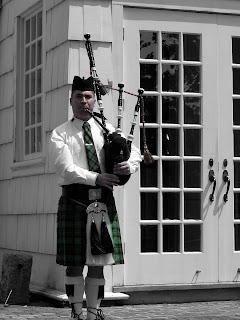 Because a piper can play a few tunes on the pipes, it is not a sufficient credential to accept an invitation to play in church on a Sunday morning or for a church related ceremony such as a wedding or a memorial service. To my dismay and embarrassment, I heard a piper play “Scotland the Brave”and “Oh! Rowan Tree” for a wedding ceremony and they were played quite poorly. Afterwards, when asked about his choice of tunes, his reasoning was that the pieces he played didn’t matter, because people wouldn’t know the difference anyway. Besides, he said, it is the sound of the pipes that they want to hear and not specific selections. How wrong and poorly advised he was. In contrast, the instructions I received from my piping teachers were to consider always, that there is bound to be someone in the audience who definitely knows what should be played and how the pipes should sound.
That brings us to the most salient point of all, which is to consider the church piper’s character. When invited to play for a morning worship service for example, it is not so people will hear the majestic sound of the bagpipes. It is to have the piper lead them in praise of God by playing a carefully selected hymn or medley of hymns in which individuals can “hear the words.” People will praise God from their hearts, while the piper leads them in their worship, not attracting attention to himself or herself, but to God, the object of their worship. The music has to be so recognizable that one can distinguish the words, while the tuning and timing must be impeccable. Nothing less than perfection can be offered to God. Music half-practiced, played on a poorly tuned instrument is not sufficient. One has to be a disciplined musician able to recognize the sacred nature of a church worship service.
Because playing for a worship service is to bring honor to God, the person leading the service must have freedom of conscience, knowing there’s nothing in his or her character that would impede delivery of the musical offering to the Creator of the world, and the Saviour of mankind. It is a huge responsibility to bring a congregation in praise before God. Certainly, one needs to have taken time to pray that God would forgive him or her for whatever could cause a separation from God. In short, the church piper must have recognized that there were things in his or her life that at some time, were displeasing to God and must be forgiven so the offering of music will be unhindered and sincere.
In short, the church piper must know Jesus our Lord personally, recognizing that it was for the purpose of paying to God the debt owed for the piper’s sinfulness, that Jesus gave His life, and that His sacrifice has to be accepted as one’s own personal payment to God. The Scripture has to be meaningful to a church piper. It says, “For God so loved the world, that He gave His only begotten Son that whosoever believes in Him should not perish but have everlasting life.” The piper must live by this promise. Then, it is possible to come boldly before God, and He will listen to praise and requests whether verbal or musical. Otherwise, any piper, expert as he or she may be, who does not know Jesus in this personal way, cannot expect God to listen. He just will not hear. This is an extremely important part of becoming a church piper.
This is sufficient to start us thinking on the subject. Subsequent blogs will suggest the right music for specific occasions and the church piper’s role in the church. Personal experiences that helped to mould The Church Piper will be included. Discussion is welcomed.
Keith MacDonald, OD
The Church Piper

It is best to start by explaining what it is to be a church piper. Afterwards, in a short series, I will tell how I became a church piper, to be called upon regularly to lead our congregation in worship, and to play for weddings and funerals.

That brings us to the most salient point of all, which is to consider the church piper’s character. When invited to play for a morning worship service for example, it is not so people will hear the majestic sound of the bagpipes. It is to have the piper lead them in praise of God by playing a carefully selected hymn or medley of hymns in which individuals can “hear the words.” People will praise God from their hearts, while the piper leads them in their worship, not attracting attention to himself or herself, but to God, the object of their worship. The music has to be so recognizable that one can distinguish the words, while the tuning and timing must be impeccable. Nothing less than perfection can be offered to God. Music half-practiced, played on a poorly tuned instrument is not sufficient. One has to be a disciplined musician able to recognize the sacred nature of a church worship service.
Because playing for a worship service is to bring honor to God, the person leading the service must have freedom of conscience, knowing there’s nothing in his or her character that would impede delivery of the musical offering to the Creator of the world, and the Saviour of mankind. It is a huge responsibility to bring a congregation in praise before God. Certainly, one needs to have taken time to pray that God would forgive him or her for whatever could cause a separation from God. In short, the church piper must have recognized that there were things in his or her life that at some time, were displeasing to God and must be forgiven so the offering of music will be unhindered and sincere.
In short, the church piper must know Jesus our Lord personally, recognizing that it was for the purpose of paying to God the debt owed for the piper’s sinfulness, that Jesus gave His life, and that His sacrifice has to be accepted as one’s own personal payment to God. The Scripture has to be meaningful to a church piper. It says, “For God so loved the world, that He gave His only begotten Son that whosoever believes in Him should not perish but have everlasting life.” The piper must live by this promise. Then, it is possible to come boldly before God, and He will listen to praise and requests whether verbal or musical. Otherwise, any piper, expert as he or she may be, who does not know Jesus in this personal way, cannot expect God to listen. He just will not hear. This is an extremely important part of becoming a church piper.
This is sufficient to start us thinking on the subject. Subsequent blogs will suggest the right music for specific occasions and the church piper’s role in the church. Personal experiences that helped to mould The Church Piper will be included. Discussion is welcomed.
Keith MacDonald, OD
The Church Piper

Wednesday, May 22, 2013
Dedicaton of a Celtic Cross
Recently, a piper was heard playing "Be Thou My Vision" for a wedding. I have fond memories of the time when I was asked to play it, but not for a wedding.
This was in Winnipeg, in the early spring and I was home alone on a Saturday morning when the phone rang. The caller asked, "Are you Dr. MacDonald, the piper, and can you play, "Be Thou My Vision?" He seemed quite anxious because he asked all this in one sentence.
I responded, saying, Yes, I am, and yes, of course I can play, "Be Thou My Vision." With that, the person exclaimed, "Well thank God for that!" Naturally, I thought this must be serious business when he was already thanking God that he had located the person he intended to find, and that he could play the hymn requested.

Indeed, this call was unusual, so I asked, "Who is speaking, and why do you want to know if I can play, “Be Thou My Vision?" He was more relaxed after that, and responded, saying, "I am the pastor of First Presbyterian Church by Vimy Park. We plan to dedicate a Celtic cross in the churchyard in June. The program is already printed and it states that the piper will be playing, "Be Thou My Vision" for the congregation to sing. I've asked the Cameron Highlanders whose home this church is, if one of them would play the hymn and no one could. The Pipe-Major suggested your name and that's why I'm phoning. Would you accept our invitation to play for the dedication ceremony?
I graciously accepted his kind invitation and he asked, “May I come up to your place right away and determine how well people might be able to sing to the pipes?" I answered that it would be quite satisfactory if he would come right now and he agreed that he would.
Immediately, I got my pipes as well as a hymnbook from the basement where I usually practiced my pipes. I tuned my pipes so they'd be ready when he came and very soon his knock came on the door. After making ourselves acquainted, the pastor stood in the middle of the living room with the hymnbook in his hands singing, "Be Thou My Vision,” to the skirl of the pipes. We both sensed accomplishment. After the first verse, he nodded, saying, "I'm sure it will work."
The pastor asked me not only to play for the dedication which would be after the service, but also before church began, with every hymn I knew that contained the word "cross."
When the morning came to play, it was still a little cool outside and I played many hymns that contained the word, “cross,” such as “The Old Rugged Cross,” “Jesus, Keep Me Near The Cross,” and “Beneath The Cross Of Jesus.” After the service, I led the whole congregation outside to the cross. I don’t remember what hymn I played but everyone arranged themselves around the cross. When the time came to sing, I played the first verse of “Be Thou My Vision” solo, then continued to play the five verses with congregational singing, ending with the solo. Seven times in all, and everyone considered this to be a very sacred occasion.
Meanwhile, the Cameron Highlanders Pipe Band was standing at attention listening to the dedication. They had returned from having piped for a church parade. None from the band asked for the music, which I think was a bit disappointing, but then, they are not inclined to play hymns on the bagpipes. We certainly are, especially on an occasion such as this. Much planning had been given to dedicating the cross simulating the one on which our Saviour died. I thought you'd be interested in hearing the story.
Another hymn I arranged that was played, this time for a funeral, was "I'd Rather Have Jesus Than Anything." When I heard and saw it on the video I felt that piper had appreciated my arrangement because he was playing something other than "Amazing Grace," which is too often played when other beautiful hymns could be played instead.
It was fun to tell the story of the phone call on a Saturday morning and add the second short story.
This was in Winnipeg, in the early spring and I was home alone on a Saturday morning when the phone rang. The caller asked, "Are you Dr. MacDonald, the piper, and can you play, "Be Thou My Vision?" He seemed quite anxious because he asked all this in one sentence.
I responded, saying, Yes, I am, and yes, of course I can play, "Be Thou My Vision." With that, the person exclaimed, "Well thank God for that!" Naturally, I thought this must be serious business when he was already thanking God that he had located the person he intended to find, and that he could play the hymn requested.
Indeed, this call was unusual, so I asked, "Who is speaking, and why do you want to know if I can play, “Be Thou My Vision?" He was more relaxed after that, and responded, saying, "I am the pastor of First Presbyterian Church by Vimy Park. We plan to dedicate a Celtic cross in the churchyard in June. The program is already printed and it states that the piper will be playing, "Be Thou My Vision" for the congregation to sing. I've asked the Cameron Highlanders whose home this church is, if one of them would play the hymn and no one could. The Pipe-Major suggested your name and that's why I'm phoning. Would you accept our invitation to play for the dedication ceremony?
I graciously accepted his kind invitation and he asked, “May I come up to your place right away and determine how well people might be able to sing to the pipes?" I answered that it would be quite satisfactory if he would come right now and he agreed that he would.
Immediately, I got my pipes as well as a hymnbook from the basement where I usually practiced my pipes. I tuned my pipes so they'd be ready when he came and very soon his knock came on the door. After making ourselves acquainted, the pastor stood in the middle of the living room with the hymnbook in his hands singing, "Be Thou My Vision,” to the skirl of the pipes. We both sensed accomplishment. After the first verse, he nodded, saying, "I'm sure it will work."
The pastor asked me not only to play for the dedication which would be after the service, but also before church began, with every hymn I knew that contained the word "cross."
When the morning came to play, it was still a little cool outside and I played many hymns that contained the word, “cross,” such as “The Old Rugged Cross,” “Jesus, Keep Me Near The Cross,” and “Beneath The Cross Of Jesus.” After the service, I led the whole congregation outside to the cross. I don’t remember what hymn I played but everyone arranged themselves around the cross. When the time came to sing, I played the first verse of “Be Thou My Vision” solo, then continued to play the five verses with congregational singing, ending with the solo. Seven times in all, and everyone considered this to be a very sacred occasion.
Meanwhile, the Cameron Highlanders Pipe Band was standing at attention listening to the dedication. They had returned from having piped for a church parade. None from the band asked for the music, which I think was a bit disappointing, but then, they are not inclined to play hymns on the bagpipes. We certainly are, especially on an occasion such as this. Much planning had been given to dedicating the cross simulating the one on which our Saviour died. I thought you'd be interested in hearing the story.
Another hymn I arranged that was played, this time for a funeral, was "I'd Rather Have Jesus Than Anything." When I heard and saw it on the video I felt that piper had appreciated my arrangement because he was playing something other than "Amazing Grace," which is too often played when other beautiful hymns could be played instead.
It was fun to tell the story of the phone call on a Saturday morning and add the second short story.
Subscribe to:
Posts (Atom)